
You’re Not Homesick for 1998
My name is Liam… and I run an adult summer camp called Camp No Counselors, so you should take everything that follows with an appropriate amount of salt. I have a commercial interest in you believing that people need to get off their phones and into a lake.
Noted. Declared. Let’s carry on.
Here’s the thing I actually want to talk about.
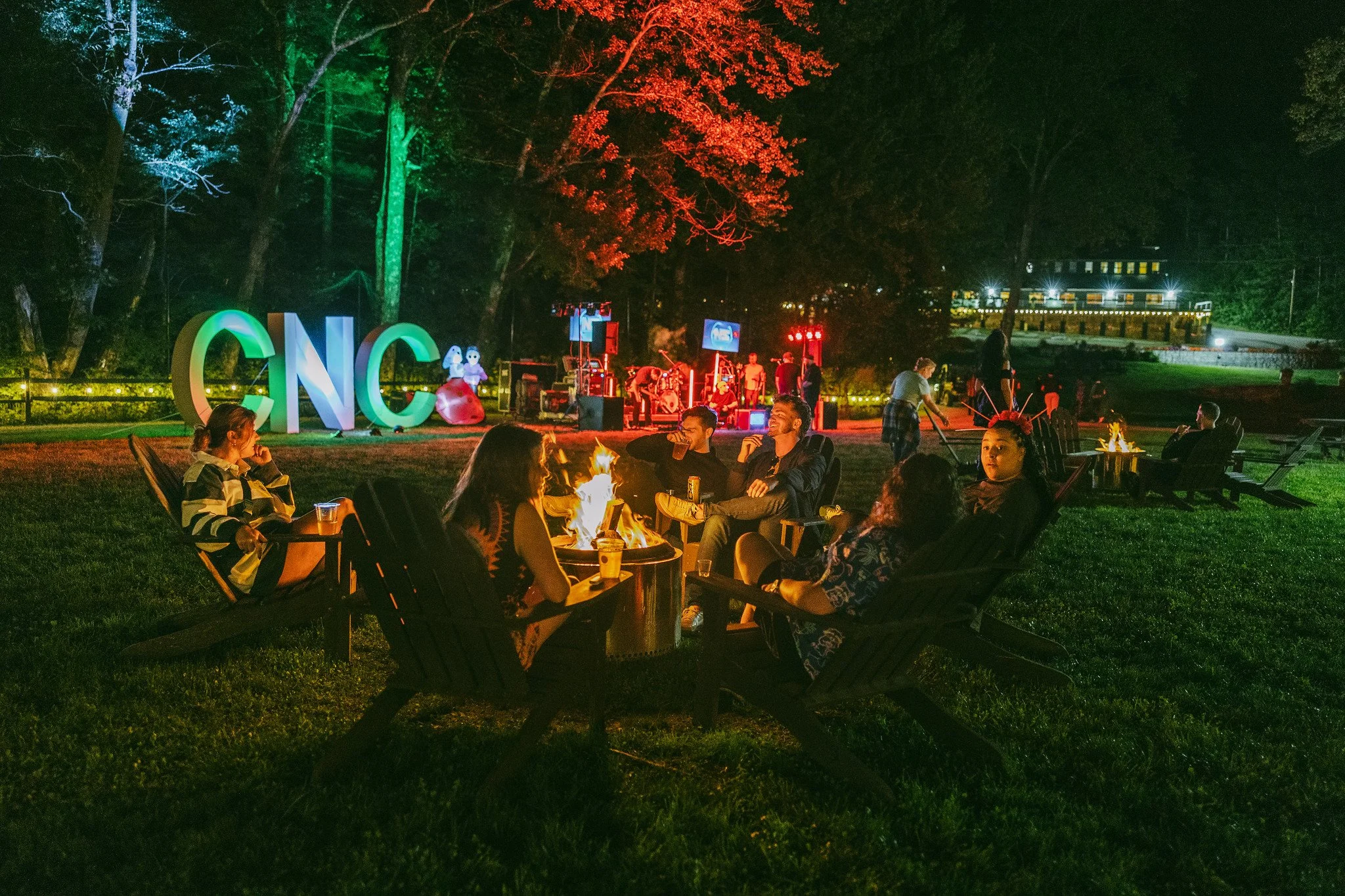
Last September, on the final night of our Labor Day camp, I walked past the fire at around one in the morning. There were maybe nine people still up. One of them, a guy in his late thirties who had arrived on his own three days earlier and barely spoken to anyone on the bus, was mid-sentence. I caught about four words of it. Something about his dad.
The people listening had known him for less than seventy-two hours.
I’ve watched some version of that scene happen at the end of every camp for years. Fifty thousand people have been to Camp No Counselors. And at some point it stopped feeling like a nice thing that happened at our event and started feeling like evidence of something.
The diagnosis we’ve all already made
You know this part. Everyone knows this part.
We’re more connected than any humans have ever been and lonelier than most. We have five hundred contacts and nobody to call. We spend four hours a day on devices engineered by very smart people to keep us there, and we get off them feeling worse, and we get back on them anyway.
Work swallowed the rest. The commute came back, or it didn’t and somehow that was worse, because now the office is the kitchen table and the day never properly ends. The news is a firehose of things you can’t affect. The algorithm has worked out that outrage holds you longer than joy does, and it’s right.
And then, late at night, a very specific ache: a video of kids running through a sprinkler in 1997, and something in your chest goes sideways.
I’m not going to relitigate any of that. Smarter people have written it better and you’ve read it.
What I want to argue is that we’ve got the diagnosis slightly wrong, and that the wrongness matters, because it’s the reason nothing anyone suggests actually helps.
The phone isn’t the disease
We talk about phones like they’re the cause. Delete the apps. Grayscale the screen. Buy a dumbphone, post about buying a dumbphone, reinstall everything within a fortnight.
I don’t think the phone is the disease. I think it’s the painkiller.
Something went missing first. The phone rushed in to fill the gap, the way painkillers rush into a space where something actually hurts. Taking it away without fixing the underlying thing just means you feel the hurt more clearly, which is why digital detoxes mostly feel like penance and mostly don’t last.
So what went missing?
Not community, exactly. That word has been used so much it’s stopped meaning anything. Every brand has a community now. My bank thinks it has a community.
What went missing is more specific and more boring than that, and I only worked it out by watching the same thing happen at a lake year after year.
What actually disappeared
Here is the thing that made friendship happen for most of your life, and you probably never noticed it was a thing.
A container. A bounded amount of time, with other people in it, where nobody is trying to achieve anything.
School had it. You didn’t choose your friends at school, you were simply in a room with the same thirty people for six hours a day, five days a week, for years, with nothing in particular at stake. Friendship wasn’t an effort. It was a byproduct of proximity and boredom.
College had it. Your first job, if you were lucky, had it, back when a job meant a floor of people and a pub on a Friday rather than a Slack workspace and a calendar invite called Virtual Coffee.
And then somewhere around twenty-seven, it stopped.
Nothing replaced it. Nothing even tried. Adulthood handed you a calendar and said: from now on, every single hour you spend with another human being has to be organized by somebody, booked in advance, worked around three other people’s schedules, and fitted between obligations. Every friendship becomes a logistics problem with a cancellation rate.
So you text “we should do something” and mean it sincerely, and two years pass.
That’s not a character flaw. It’s not that you got worse at friendship. The container disappeared and nobody mentioned it.
And this is why the nostalgia hurts in the particular way it does. We think we’re homesick for a decade. We’re not. Nobody genuinely wants 1998 back, with its dial-up tone and its three television channels and its casual cruelty.
What you miss is having nothing to do, in the company of other people, for an extended period, with no way for anyone to reach you.
That’s it. That’s the whole ache.
And the reason it aches rather than simply registering as a memory is that we’ve quietly accepted it’s gone for good. That it was a feature of being a child and the price of adulthood is its loss.
I don’t think that’s true, and we’ve got a hundred and fifty weekends of evidence.
What I’ve watched happen, over and over
I want to be precise about this, because the general version sounds like marketing and the specific version doesn’t.
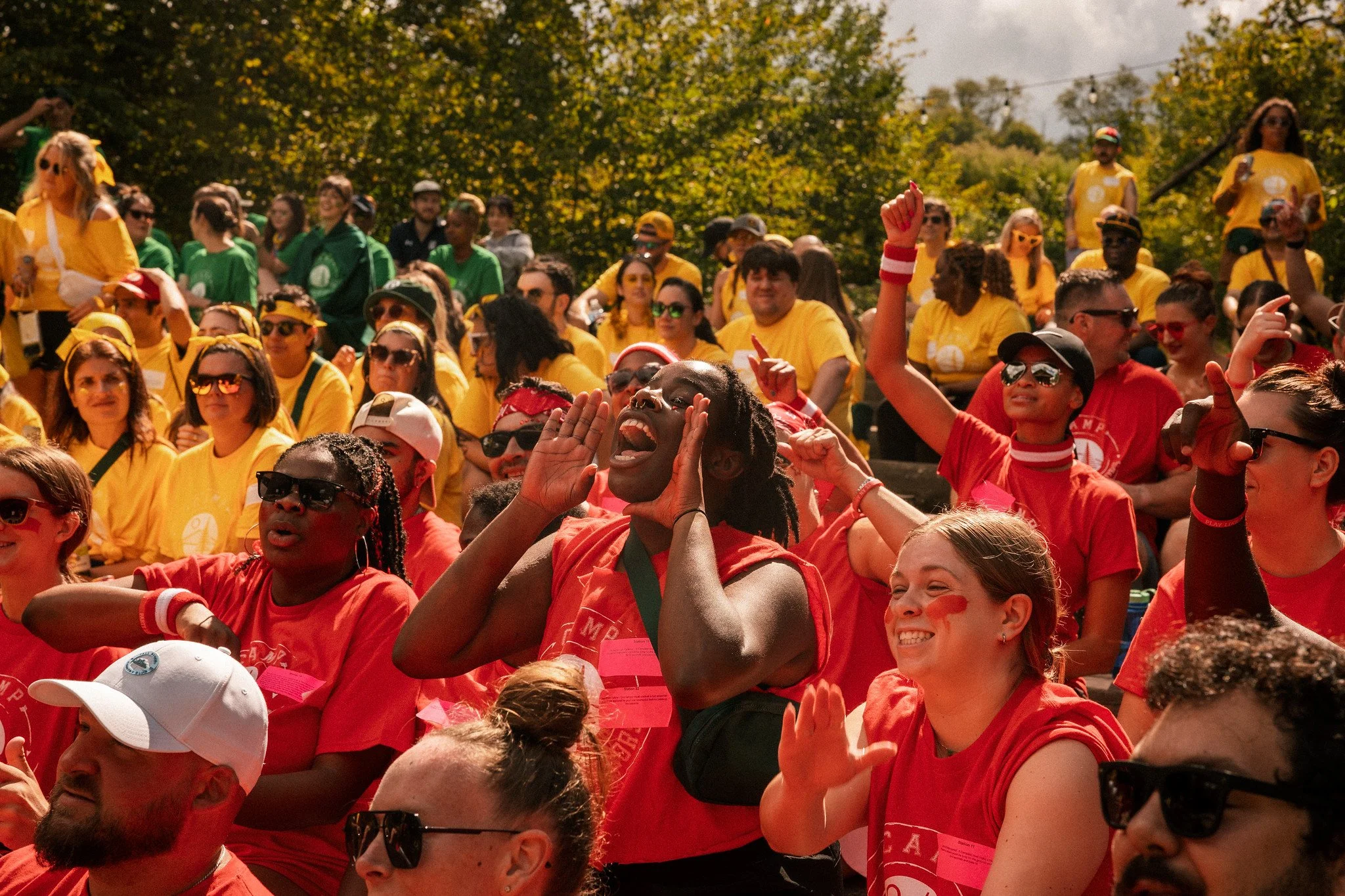
It takes about an hour. Not weeks. Not three visits and a shared interest. An hour. People get off a bus genuinely nervous, do one slightly stupid thing together, and by dinner the nervousness is gone. I used to think this was our doing. It isn’t. It’s what humans do when you put them in a container and stand back.
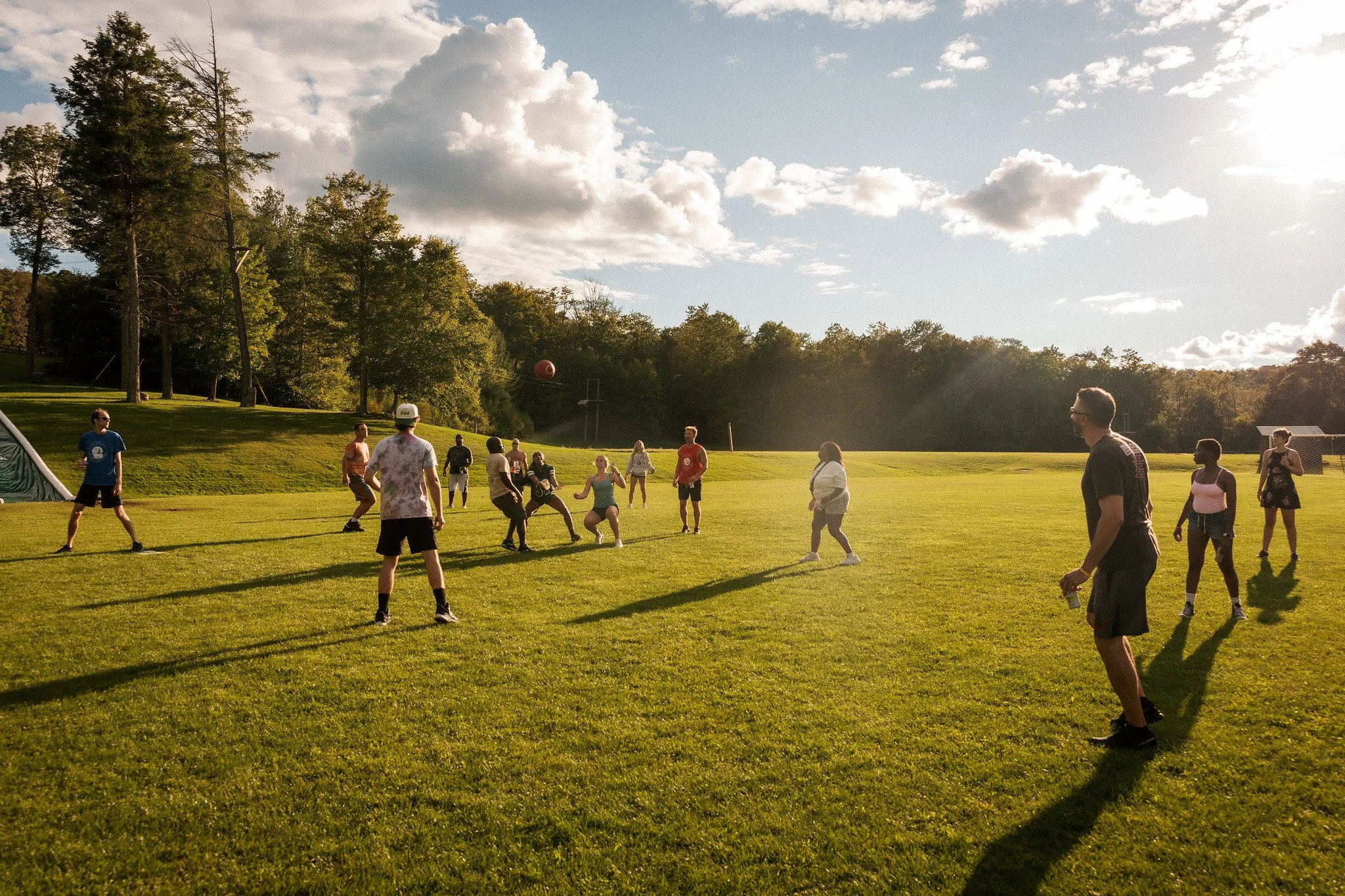
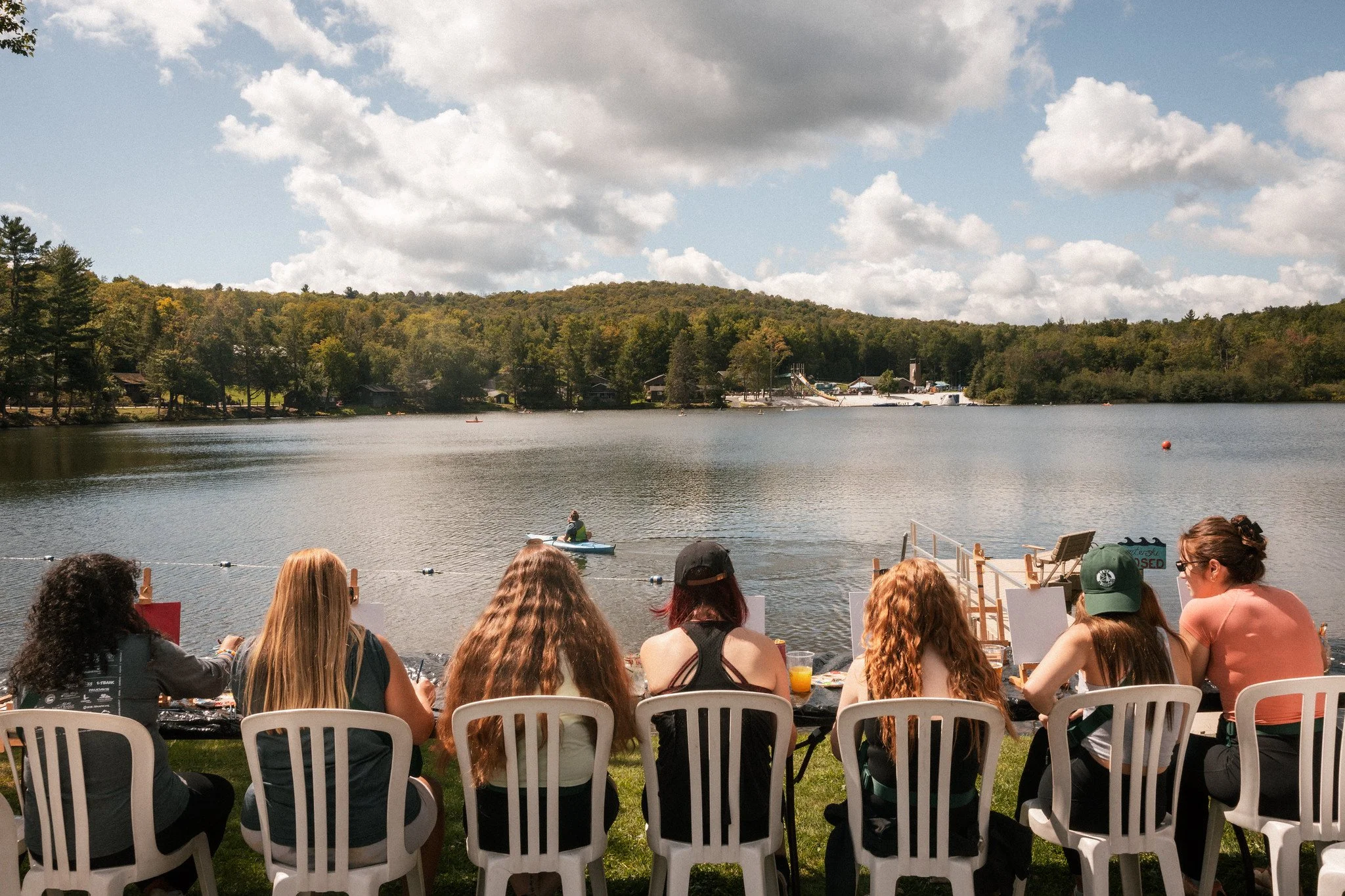
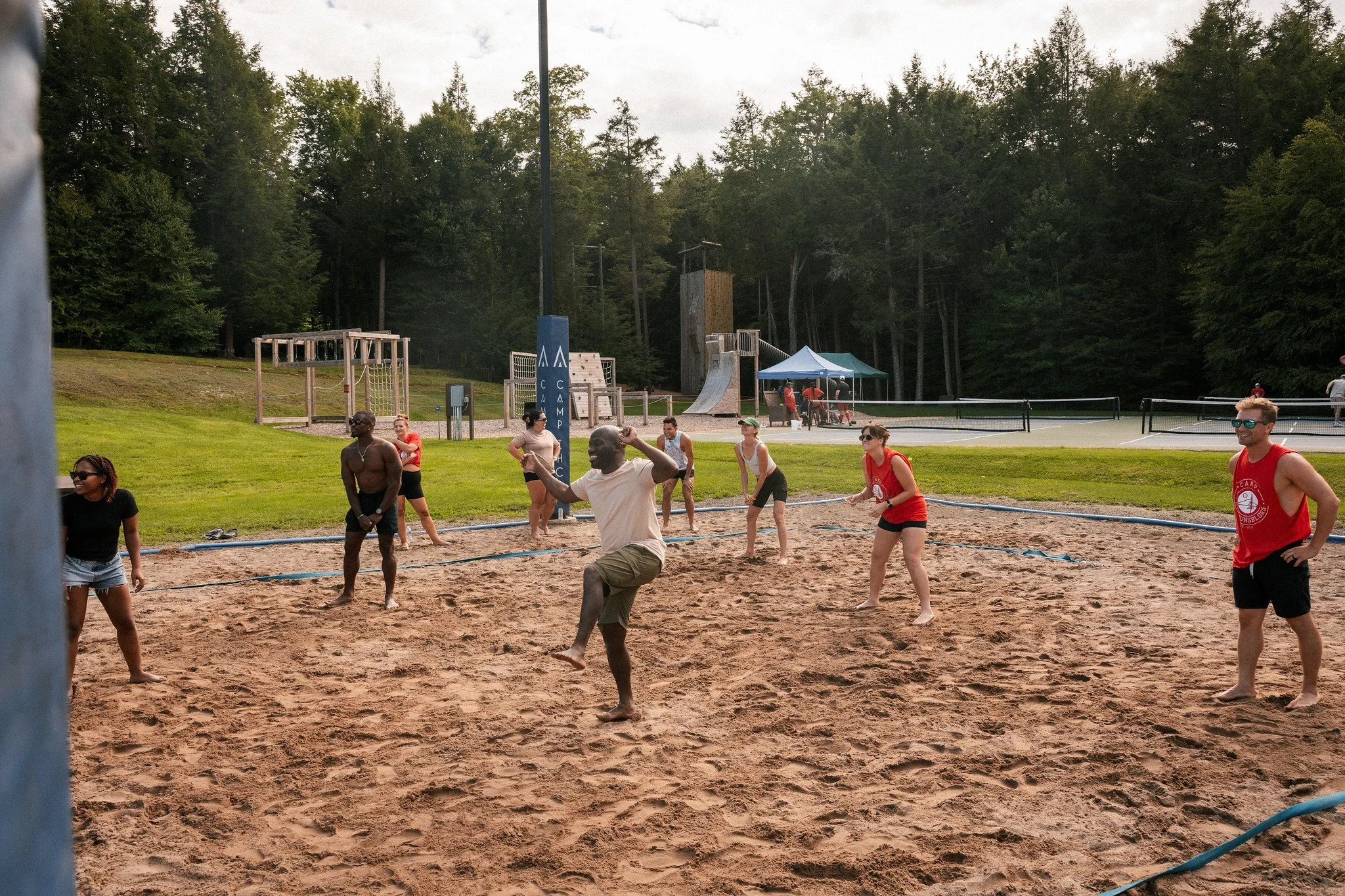
It never happens during conversation. This is the part that surprises people most. Nobody becomes friends at camp by sitting down and having a conversation. They become friends sideways, while doing something else. On a boat. Mid-kickball. Waiting for a canoe. The talking happens at an angle, which removes all the pressure, which is exactly why it works.
This is also why networking events are miserable and why “let’s grab a coffee” is the least efficient friendship technology ever devised. Two people, facing each other, with nothing to do but perform interestingness.
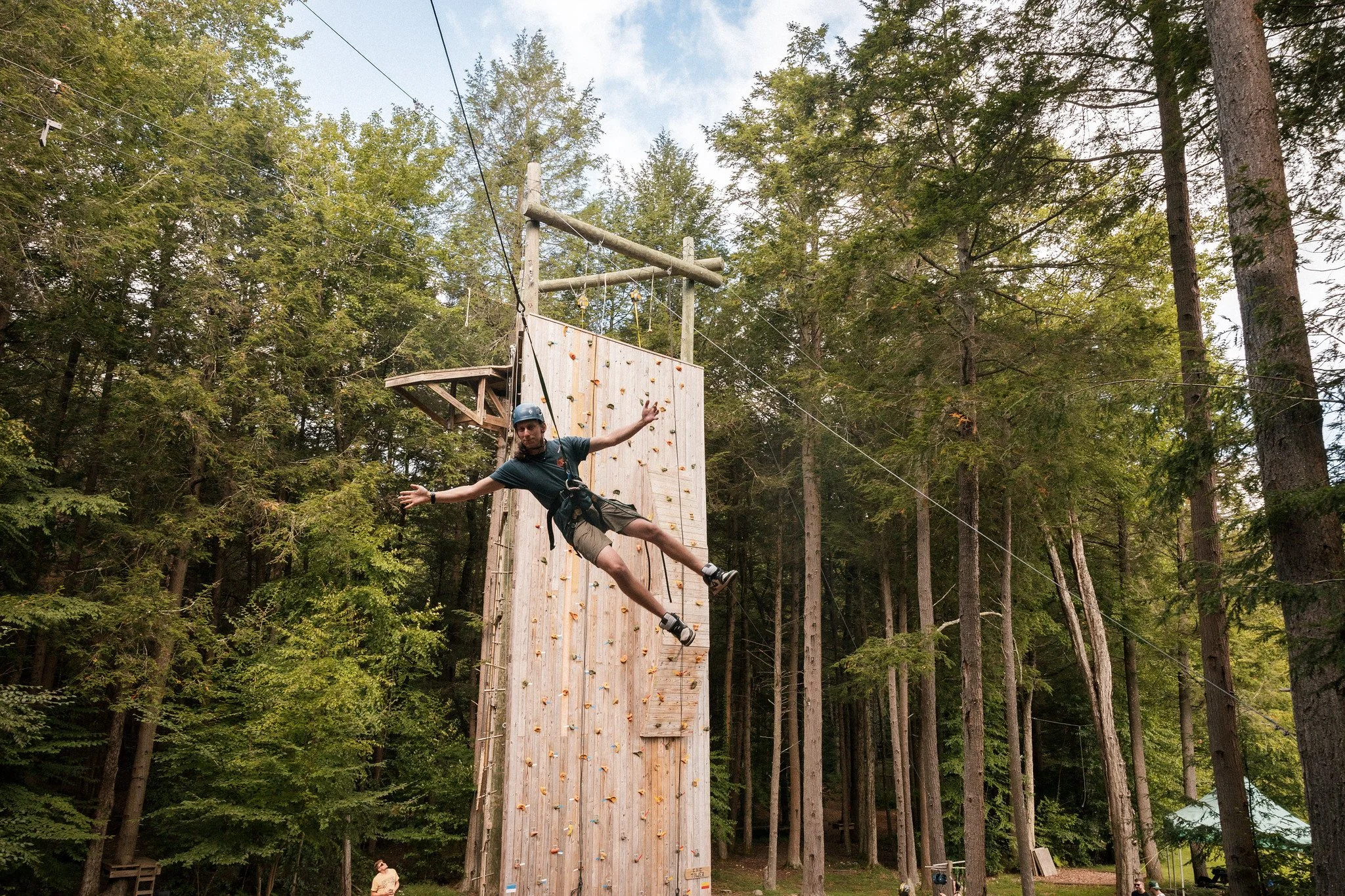
The moment is almost always mildly humiliating. Falling off a paddleboard. Missing the ball entirely. Being extremely bad at archery in front of six strangers. There’s something about being witnessed failing at something that doesn’t matter that collapses the distance between adults faster than anything else I’ve seen. You cannot be impressive at a slip ‘n slide. That’s the point.
The phones leaving isn’t the cause. Signal is patchy at most of our sites, which we didn’t design and wouldn’t fix. But the absence of phones isn’t what makes it work. It’s just what stops it being interrupted. The painkiller goes away because the thing that hurt went away first.
The people who come alone do best. Consistently. Every time. Which seems backwards until you think about it: they arrive with nobody to retreat to, which means they’re available. A group of eight that arrives sealed shut will have a nice weekend. A person who arrives alone will have a different kind of weekend entirely.
Roughly half our campers are first-timers, and many of them come on their own. They are, almost without exception, the ones writing to us afterwards.
On everyone being there
A word about who’s in the room, because it matters more than it sounds.
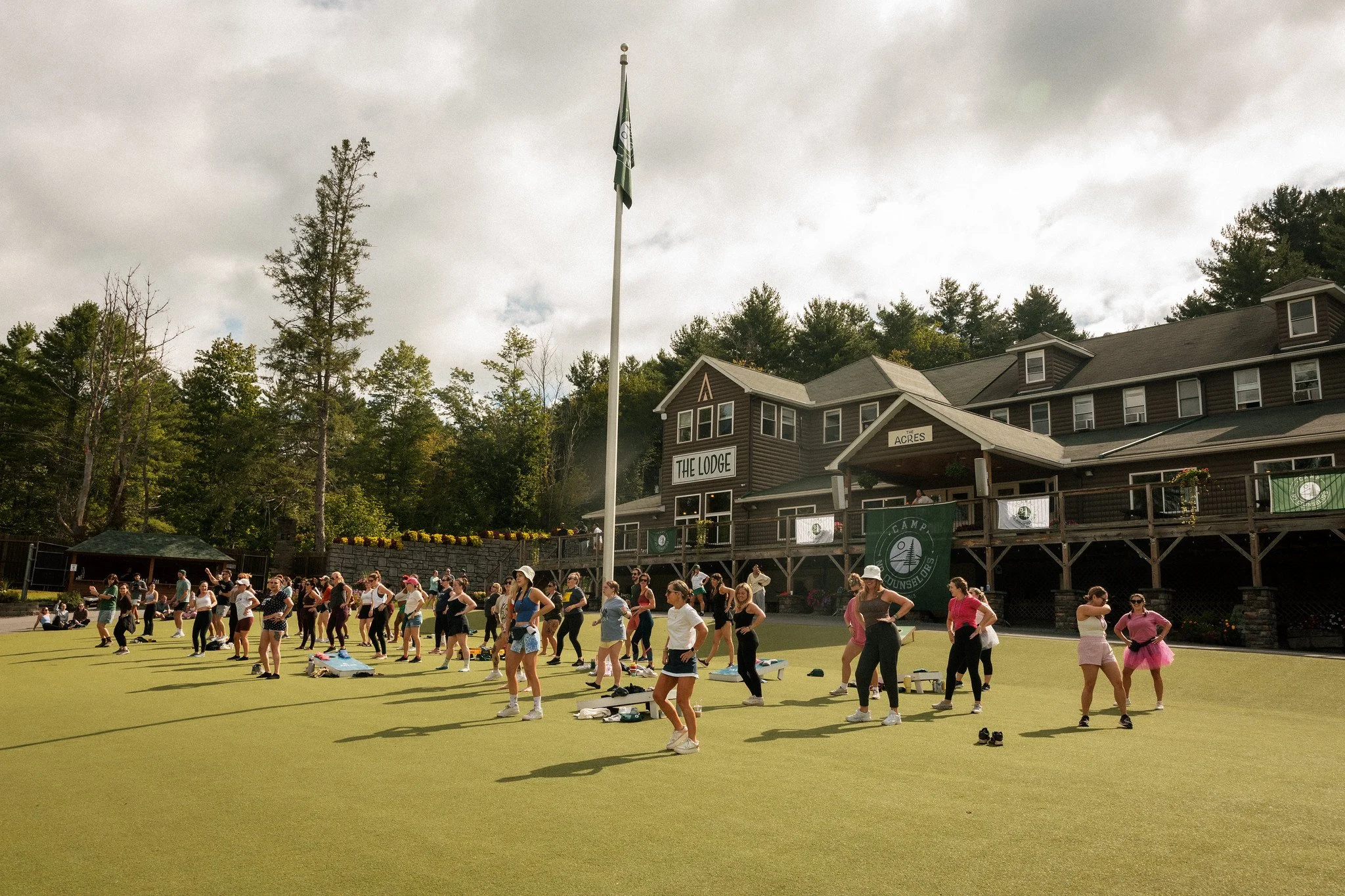
Our camps are co-ed. Men, women, couples, friend groups, people on their own. Mid-twenties to well past fifty. They always have been, since the first one.
There are brilliant single-gender camps doing something genuinely valuable, and I’m not going to pretend otherwise or make a case against them. Different thing, different reason, both can be good.
But I’ll tell you what I think the mix does, because I’ve watched it.
Of all the friendships that quietly vanish in adulthood, the ones across gender go first and go hardest. School gave you them. Work gives you colleagues and a certain carefulness. After about thirty, for an enormous number of people, the circle narrows to their partner, their partner’s friends, and whoever they already knew at twenty-two.
A camp with everyone in it hands that back. Not as a romantic proposition, although obviously that happens and we’ve had the weddings to prove it. As a plain social fact: you end up in a canoe with somebody you would never have met, and it turns out you like them, and that’s a category of friendship most adults simply stopped having access to.
For that to work it has to be run properly. Cabins are single-sex as standard, with couples’ cabins for people who arrive together. There’s staff on site all weekend. And there’s one rule, which is the only rule, and which we actually enforce: don’t be the asshole.
That rule does more work than any policy document would. It’s unambiguous, everyone understands it instantly, and the reason it holds is that the people who come here want it to.
A culture nobody protects isn’t a culture. It’s a hope.
The ones who keep coming back
We have campers who have been coming for over a decade.
Not the same weekend every year as a tradition, although some of them do that too. I mean people who came once in 2014, on their own, knowing nobody, and are still in the group chat, still at each other’s weddings, still turning up.
I always assumed the repeat campers came back for the camp. The lake, the parties, the general silliness of it.
They don’t. They come back for the people, and increasingly they come back with people, because the thing they found turned out to be transferable. They bring the friend who’s been having a rough year. They bring the one who just got divorced. They bring their sister.
That’s the part that stopped feeling like a business to me somewhere around the hundredth camp.
The honest bit
Here’s what a weekend can’t do.
It can’t fix a life. Three nights on a lake is not treatment for depression, and anyone selling it that way should be ignored. You’ll go home to the same job and the same inbox and the same news.
What it can do is smaller and, I’d argue, more useful.
It proves the thing still works.
Most people arrive at thirty-eight quietly convinced that they’ve lost the ability. That friendship was a skill they had at twenty and misplaced somewhere, and that everyone else kept theirs. That the version of them that could walk up to a stranger is gone.
Then they spend three days discovering it was never a skill. It was a setting. And settings can be rebuilt.
What people take home isn’t the weekend. It’s the knowledge that the capacity is intact and the problem was architectural all along. After that, some of them start a monthly thing in their own city. Some of them finally make the trip they’d been saying “we should do something” about for two years. Some of them just stop believing it’s too late, which is not nothing.
So…
You’re not homesick for 1998.
You’re homesick for unstructured time, in the company of other people, with nothing to achieve and nowhere to be. Which is genuinely available, costs less than you think, and does not require a time machine.
I happen to sell one version of it. There are others, and I’d rather you did any of them than none of them. Rent a house with six people and leave your laptop at home. Join something that meets every week whether you feel like it or not. Say yes to the thing on Thursday.
Build the container. The friendship takes care of itself. It always did.
And if you want to borrow ours, there’s a lake, and someone will save you a seat at dinner before you’ve worked out where to sit.
Liam Macleod
Director, Camp No Counselors
The original adult summer camp. Since 2013.