What to Expect at Adult Summer Camp
The hardest part of booking your first camp is not knowing what you have signed up for. Three nights is a long time to spend somewhere you cannot picture, with people you have not met, doing things you have not done since you had a Discman and strong opinions about which gel pen was best.
So here is the whole thing. The program, day by day, and the three parts nobody warns you about.
Quick note on days. Our camps don't all start on the same day of the week. Texas, California and Michigan run Thursday to Sunday, New York runs Friday to Monday. So we count in days rather than weekdays. Check your camp page for the actual dates: Texas, New York, California, Michigan.
Start here, because it is the bit people worry about
You will be uncomfortable for about an hour.
That is the honest answer. You will get off a bus, or out of a car, somewhere full of adults you do not know, and there will be a moment where you think: what have I done.
Everybody has that moment. It is the grown-up version of being dropped off at a birthday party where you only know the birthday kid. It lasts until roughly dinner, and then something happens that we will come back to at the end.
Keep that in mind while you read the rest, because the schedule below is not really the point. It is the structure that makes the other thing possible.
Day One, early afternoon. The bus.
Most people start in a hotel parking lot near an airport, holding a duffel bag, scanning the group and quietly working out who they will end up talking to.
The answer is usually whoever sits nearest. Something happens on a bus full of adults leaving a city with nowhere to be. Twenty minutes in, someone opens a drink. An hour in, it sounds exactly like the back of the coach on a school trip, except nobody is going to confiscate anything.
By the time you pull into camp you will know four or five people by name. This is why we push the bus over driving, and why $150 is the best money a solo camper spends. Pickup points and times are on each camp page.
Day One, afternoon. Arrival, and the drawer.
You get your cabin, your bed and a wristband. Bedding is already on the bunk, which is more than your mother ever did for you on the first day.
You will unpack for about ten minutes and then walk straight back outside, because there is nothing to do in a cabin and everything else is out there.
This is also the moment the phone goes in the drawer. Nobody makes you. Signal is patchy at most of our camps and within two hours you will stop reaching for it, which is a feeling most of us have not had since a landline was the only way anyone could find you.
The rest of the afternoon is deliberately unstructured. People walk the site, find the lake, find the bar, work out where things are. Nobody organizes you. It is the slowest the weekend ever gets.
Day One, evening. The first social.
Dinner, then the first party.
This is the night people are still slightly on their best behavior and still asking what each other does for a living. That stops fast. We have one rule, don't be the asshole, and a convention underneath it: no work talk.
It sounds small. It changes the entire weekend. Take away job titles and the quiet ranking adults do in the first five minutes, and conversations start somewhere far more interesting.
Day Two, morning. Flagpole.
The only moment all weekend where everyone is in one place. Coffee in hand, a rundown of the day, then you pick what you are doing.
Lake, courts, fields, the adventure course, archery, arts and crafts, yoga, or a hammock and absolutely nothing. It is the summer camp brochure your parents handed you in April, except you choose, and nobody is making you do the nature walk.
Nothing is compulsory. Nobody takes attendance. Some people do nine things before lunch. Some people do nothing for three days and go home delighted. Both are correct. More on how a day runs on our typical day page.
Pick your playground
-
New York Camp
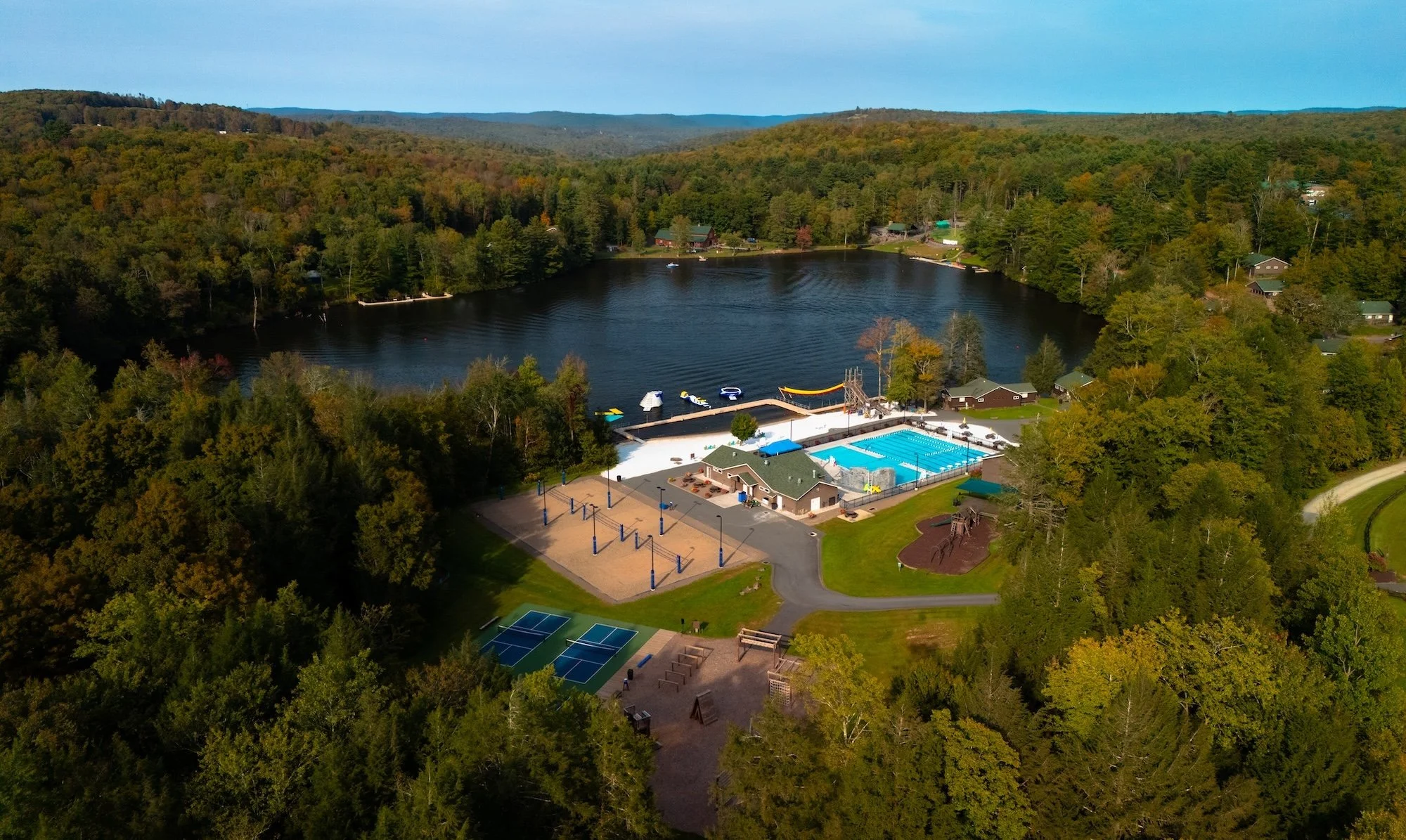
The original, and still the biggest. Our flagship camp runs twice — Memorial Day and Labor Day — bookending the summer with the two loudest weekends on the calendar. More campers, more camp and always one to sell out. If you only do one, do this one.
-

California Camp
West Coast is the Best Coast. Three nights in August at peak summer, cool activities, long warm evenings, and everything that makes camp work. Rustic, charming and full of Camp No Counselors energy. Trust us when we say this one is not to be missed!
-

Texas Camp
The first camp of the year, and the earliest escape you’ll find. Hill Country in March, when everywhere else is still gray. Smaller, warmer, and run on a classic summer camp lakefront, this is the camp for people who refuse to wait until summer to start theirs.
-
Michigan Camp
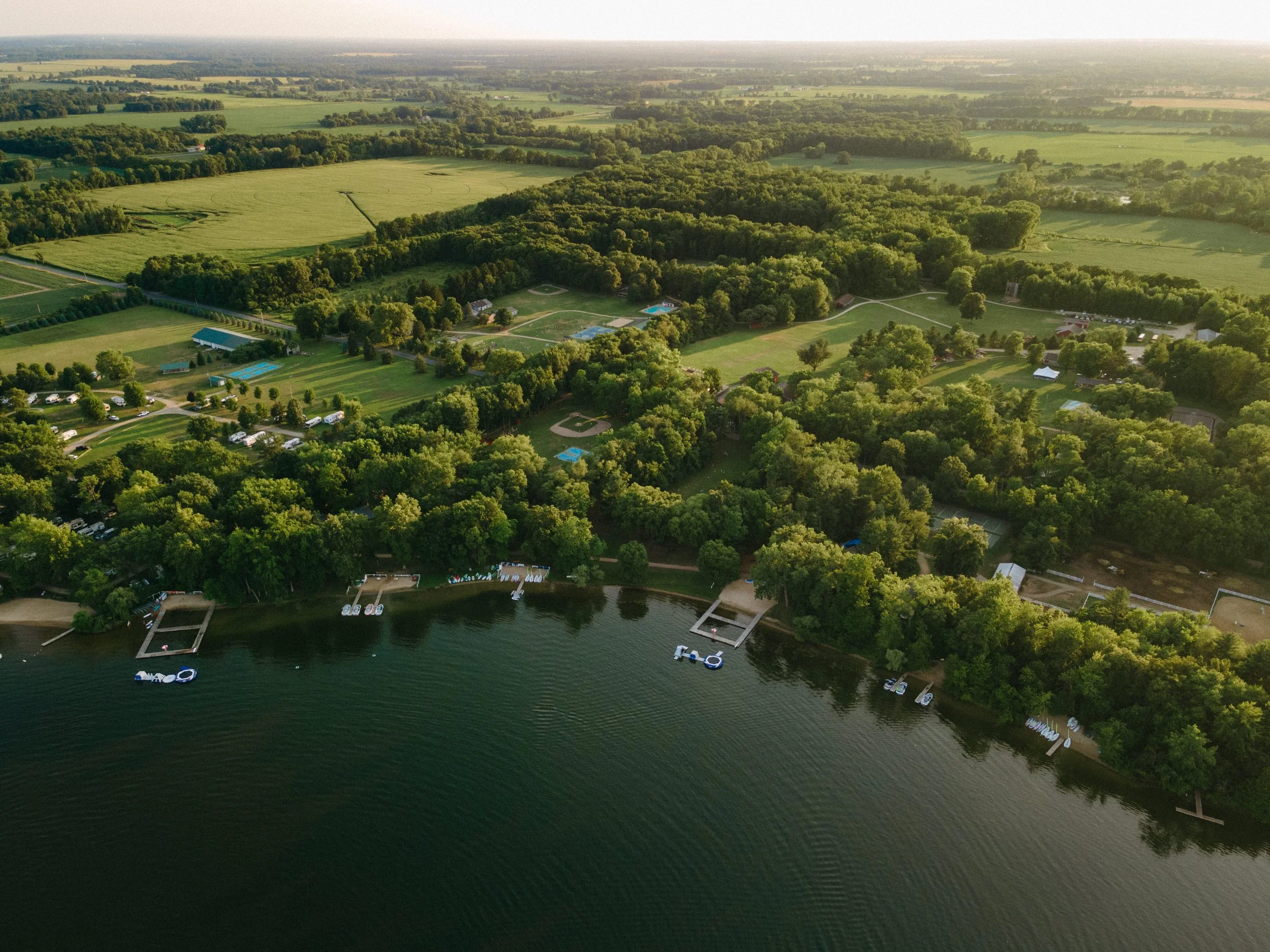
Our Midwest camp sits nicely between Chicago and Detroit and is hosted at a classic summer camp. This is the one you’ve all been asking for… and we’re excited to host it! First run back in 2027, so this crowd gets to say they were there.
Day Two, afternoon. The part everyone talks about.
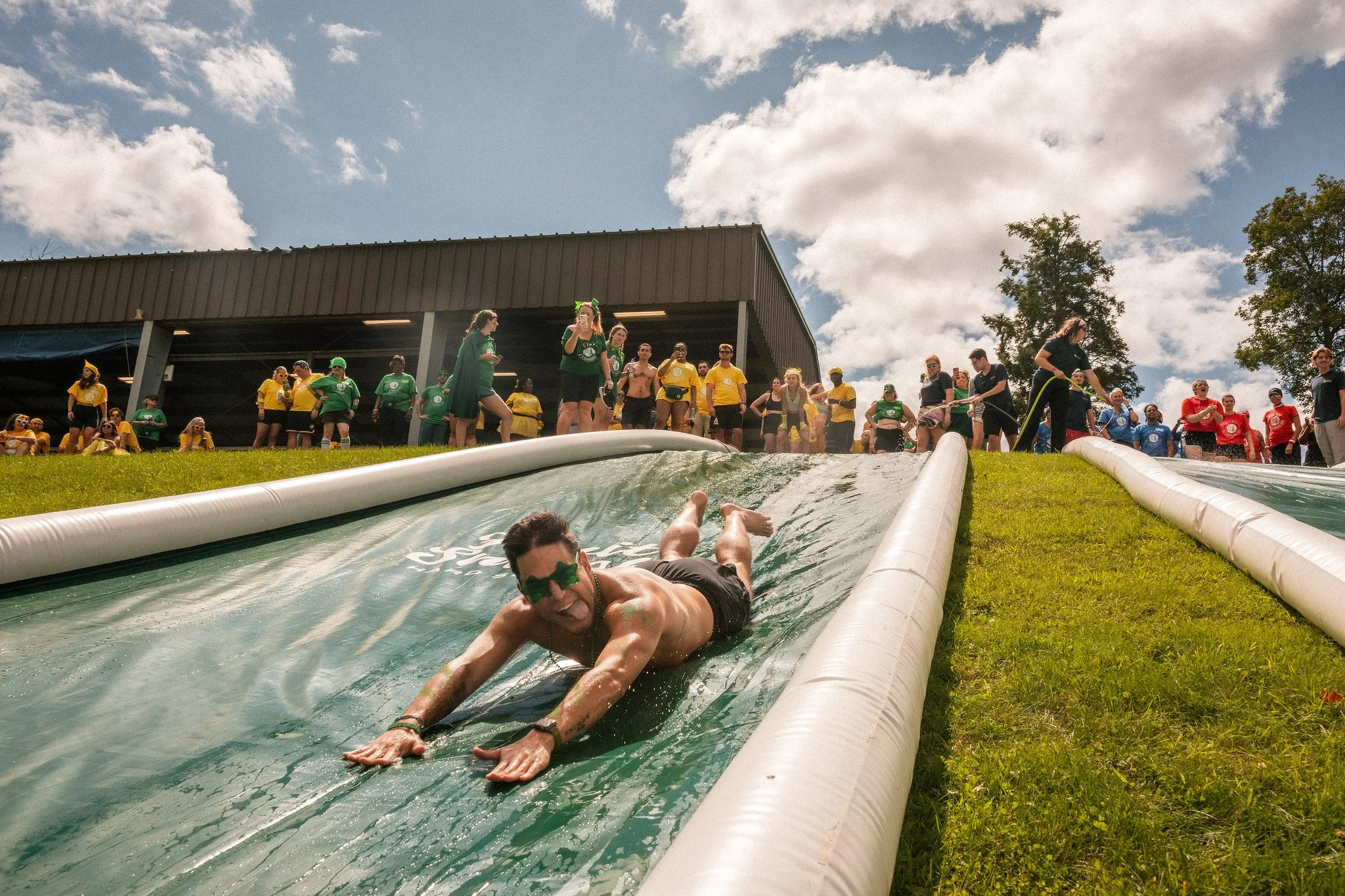
This is the busiest stretch and the one that ends up in every photo. Camp olympics, color war, the lake, the inflatables, a dodgeball tournament that gets far more competitive than anyone intended.
Worth knowing: the olympics and the pool party sometimes swap places depending on the weather. If it looks like rain on the day we booked the lake for, the pool party moves and the olympics come forward, or the other way round. Your schedule at camp is the one that counts, and the team on site will tell you at flagpole. It has never once made the weekend worse.
What happens either way is the same. You will end up on a team with six people you met at breakfast, shouting at each other about a kickball result by lunchtime, with the exact energy of a sports day you have not thought about in twenty-five years.
That is the mechanism. Doing something mildly ridiculous together collapses the distance between strangers faster than any amount of conversation. It is why camp works and why a networking event does not.
Day Two, night. The big one.
Themed party, live music, DJ sets, the bar open all night. The loudest night of the weekend and the one nobody goes to bed early for.
Somewhere in there a song will come on that you have not heard since a middle school dance, and four hundred adults will lose their minds at exactly the same moment. That is not an accident.
It usually ends at a fire with a smaller group, the music still going somewhere behind you, in a conversation that runs several hours longer than it should. Ask any camper what they remember and this is what they describe.
Day Three. The long slow one.
Day Three is the favorite for a lot of returning campers, and first-timers never see it coming.
Everyone knows each other now. Nobody is nervous. The weekend has settled into itself. More activities if you want them, more lake if you don't, a long dinner, a final social and a last campfire.
It is also the day people notice they have not thought about work since they arrived.
Day Four, 10am. The bus home.
Quieter than the ride out, in a good way. Phones come back on and immediately feel heavier than they did on the way in.
Numbers get swapped. A group chat gets created, and more often than you would expect it is still going at Christmas.
Then you go back to work and try to explain it to someone who was not there, which never quite works. It is the same problem you had every September trying to describe your summer to people who had not been.
Now the three things nobody warns you about
The schedule above is the easy part to describe. This is the part that actually changes the weekend.
One. You will not miss your phone, and that will bother you
Most of our camps have patchy signal at best. We did not design that. We would not fix it either.
Here is what usually happens. Day One afternoon you check it out of habit, six or seven times. That evening, twice. By the next morning you have genuinely forgotten where you put it.
Then at some point on Day Three you notice the thing people always notice, which is that the day felt longer. Not boring. Longer. You can account for most of the hours in it, which is not true of a normal Saturday.
It is a very specific feeling and most of us last had it around 1998, on a school holiday with nothing in the diary and no way for anyone to reach you until you came home for dinner.
That is not a wellness claim and we are not going to make one. It is just what happens when nothing in your pocket is competing for the next ten seconds. Three days of that is strange and very good, and it is the single most common thing campers mention afterwards.
You can bring your phone. Plenty of people take photos all weekend. But tell whoever needs to reach you that you will be slow, and then let it be slow.
Two. Playing outside is not a small thing
Somewhere around twelve, most of us stopped playing.
Not stopped exercising. Not stopped having hobbies. Stopped playing, in the specific sense of doing something physical, outdoors, with other people, for no reason, badly, while laughing.
Think about what a summer used to be. Out of the house after breakfast, back when the street lights came on, no plan, no watch, no phone, a hose fight that escalated well beyond anyone's intentions, and a freeze pop at four in the afternoon. Nobody was tracking it. Nobody posted it. It was just the best six weeks of the year.
Then adults replaced all of that with activities that have a point. The gym has a number. The run has a time. The hobby has an output. Even the vacation has an itinerary and a set of photographs to justify the spend.
Camp has none of that. Nobody is counting anything. There is no score that survives past dinner, no personal best, no reason to be on a lake inflatable at four in the afternoon except that you are on a lake inflatable at four in the afternoon.
It takes most people about half a day to stop needing a reason. Once they do, something unmistakable happens, and it is the closest thing to being eleven that adulthood offers.
That is really what you are buying. Not the activity list. Permission.
Three. Lean into the uncomfortable bit
Here is the thing about that first hour.
Everybody is uncomfortable. The person who looks most at ease is usually managing it better, not feeling it less. That shared slight awkwardness is not an obstacle to the weekend. It is the raw material.
It is also why camp works and most adult social situations do not. A party where everyone is confident and settled is a party where nothing moves. A camp where four hundred people are all mildly out of their depth at archery is a camp where strangers talk.
So here is thirteen years of advice in one line: do the thing you are worst at.
Go on the adventure course if heights are not your thing. Join the kickball team when you have not played since the fifth grade. Say yes to the thing at 11pm you would normally decline. Be visibly, cheerfully terrible at something in front of people you met yesterday.
You were fine with this once. At nine you would try anything in front of anyone, because nobody had told you yet that being bad at something was embarrassing. Camp is three days of getting that back.
Nobody is judging, because everyone is doing it too, and being bad at something together is a shortcut to knowing someone that no conversation can match.
The campers who get the most out of camp are not the fittest, the loudest or the most outgoing. They are the ones who decided on the way in that they were going to say yes to things. More on that in going to camp alone.
What's included in all of this
Everything except getting there. Accommodation for three nights, all meals, premium drinks, snacks, every activity and every social. Once you are at camp you will not spend a dollar.
The round trip bus is $150 and can be added at checkout or later. Private rooms are available at some camps. The full breakdown is in our pricing guide, and every camp lists what is on site: Texas, New York, California and Michigan.
Coming with people? Booking as a group takes about as long as sending one text.
What to expect of yourself
To be nervous on the way in. To be fine by dinner.
To be slightly sunburnt, properly tired and hoarse by the last morning. To have played a sport you have not played since the Clinton administration and lost. To have had a two hour conversation at a fire with somebody whose surname you still do not know.
And to spend the drive home working out when you can do it again.
What to Expect FAQs
Do I have to do the activities?
Not one of them. Do everything, do nothing, or do three things and then lie down for the rest of the afternoon. Nobody takes attendance and there's no version of this weekend you're doing wrong.
Which day does camp start?
It depends on the camp. Texas, California and Michigan run Thursday to Sunday. New York runs Friday to Monday. All of them are three nights.
Is the schedule fixed?
Mostly. The big set pieces like camp olympics and the pool party occasionally swap places depending on the weather, and the team on site will tell you at flagpole. It has never once made the weekend worse.
Is there phone signal and wifi?
It varies by camp, and honestly that's part of the point. Tell anyone who needs to reach you that you'll be slow to reply.
What if I'm not sporty?
Then you're in good company. Plenty of campers haven't played anything competitive since the fifth grade, which is exactly why the dodgeball game is funny rather than serious.
What if it's awkward?
It's awkward for about an hour. Then you're at dinner, or in a game with eleven strangers, and it stops. Most people arrive quietly nervous and by the second day nobody can remember who turned up with whom.
More on that in going to camp alone.
What time do I need to arrive?
It depends on the camp. The bus departs at a fixed time from each pickup point, so build your travel around it if you're taking it. Exact times are on your camp page and in your confirmation.
What should I pack?
Things you don't mind getting wet, something warm for the evenings, and a costume or two. We send a full list with your confirmation and a detailed one closer to camp.
A couple of camps ask you to bring your own towel, so check your camp page before you pack.
Are there staff running the activities?
Yes. The name is Camp No Counselors, but we have trained staff across the activity areas, plus lifeguards, outdoor adventure staff, medics and security on site all weekend.
How old are the campers?
Camp is 21 and over, and our campers run from their mid twenties well into their fifties and beyond.
What happens if it rains?
Camp runs regardless. We have plenty indoors, we'll shuffle the schedule where it helps, and some of the best weekends we've run have been the wet ones.
Can I come on my own?
Yes, and a lot of people do. It's the most common way to come and arguably the best way to do it.